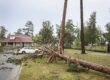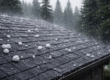

If a hailstorm has hit your neighborhood recently, the financial stakes are higher than ever. A recent CBS Minnesota investigation found that hail damage insurance claims in Minnesota are now regularly reaching $40,000 to $60,000 — and that’s only part of the problem. At the same time claim costs have spiked, insurers are quietly rolling back what your policy actually pays for. For Twin Cities homeowners navigating a hail damage insurance claim in Minnesota, understanding the rules before you file can mean the difference between a full payout and a fraction of what you need to restore your home.
Why Hail Damage Insurance Claims in Minnesota Are So Expensive
Minnesota sits at the edge of what meteorologists call Hail Alley — the corridor stretching from Texas through the Dakotas where conditions are ideal for large hail formation. The Twin Cities metro is increasingly exposed to these systems, and the frequency and intensity of damaging hail events is growing. Large hailstones (1 inch in diameter or larger) can strip the granule coating from asphalt shingles in a single storm, necessitating a full roof replacement rather than spot repairs. Add siding, gutters, windows, and HVAC equipment damage, and a single severe hailstorm can easily push total property losses past $50,000 on a modest Twin Cities home.
What’s Changing with Hail Coverage in Minnesota Policies
Many homeowners assume their standard policy covers full replacement cost for storm damage. Increasingly, that’s not the case. Insurers have introduced several changes that quietly reduce what they pay after a hail event:
- Actual Cash Value instead of Replacement Cost Value: An ACV policy depreciates your roof based on age. A 15-year-old roof that costs $25,000 to replace might receive only $8,000–$10,000 after depreciation — leaving you responsible for the rest.
- Higher wind and hail deductibles: Many policies now carry a separate, much higher wind and hail deductible — sometimes 1–2% of your home’s insured value. On a $400,000 home, that’s a $4,000–$8,000 out-of-pocket cost before coverage even begins.
- Cosmetic damage exclusions: Some policies now exclude coverage for “cosmetic” hail damage, meaning dented but structurally intact gutters, trim, or siding may not be covered even when the damage is visible and affects your home’s value.
- Matching limitations: Some carriers now limit their obligation to match undamaged sections of siding or roofing to the damaged portions, leaving homeowners with a mismatched exterior.
How to File a Successful Hail Damage Insurance Claim in Minnesota
The steps you take in the hours and days after a hailstorm significantly affect your claim outcome. Here’s what works:
- Document everything immediately. Take photos and video of your roof, gutters, siding, and soft metals — AC unit, window screens, flashings — as soon as it’s safe to do so. Include timestamps and photograph any dents in soft metals as supporting evidence of hail size.
- Get a professional inspection before calling your insurer. A qualified roofer’s written assessment — documenting hail size, impact pattern, and damage extent — creates the evidence your adjuster needs and prevents disputes about pre-existing damage.
- Know your filing window. Most policies require you to report storm damage within 12–24 months of the event. Don’t assume you have unlimited time. The earlier you file, the stronger your position.
- Request your policy’s wind and hail deductible details. Ask specifically whether you have a percentage-based deductible. Many homeowners discover this for the first time when they file — after assuming they had a flat deductible.
- Be present for the adjuster’s inspection. Walk the adjuster through every area of damage with your roofer’s report in hand. Don’t rely on the adjuster to independently find everything.
When to Consider a Public Adjuster
For claims exceeding $30,000 — which describes most full-roof replacements in the current market — a licensed public adjuster who works on your behalf (not the insurer’s) can negotiate a significantly higher settlement. Public adjusters typically charge 10–15% of the final claim payout, but they often secure settlements large enough that homeowners come out ahead even after the fee. Ask your roofing contractor for referrals to reputable public adjusters in the Twin Cities area.
Northern Lights Works Directly With Your Insurance Company
At Northern Lights Metal Roofing, we’ve helped hundreds of Twin Cities homeowners navigate the insurance claim process after hail and wind damage. We provide detailed written inspection reports, photograph every impact point, and work directly with adjusters to ensure your claim reflects the full scope of storm damage — not just what’s visible from the street. If your roof has been through a recent storm, contact us for a free inspection and let us handle the documentation so you can focus on getting your home back to normal.