

Independence Day 2026 did not stay quiet in central Minnesota. On Saturday, July 4, slow-moving thunderstorms rolled across Stearns, Benton, Wright and Sherburne counties. They dropped half-dollar hail, spun up funnel clouds, and flooded streets within minutes. So if you own a home near St. Cloud, Waite Park, Sartell, Sauk Rapids, Clear Lake, Becker, Buffalo or Maple Lake, St. Cloud hail damage is worth ruling out before fall arrives. Here is what the National Weather Service actually recorded that day, and what it means for your roof right now.

What the July 4, 2026 Storms Delivered
The National Weather Service in Twin Cities published a full summary of the event. The setup was classic midsummer Minnesota: mid-80s heat, mid-60s dewpoints, and instability above 2,100 J/kg. As a result, storms grew fast and moved slowly. Here are the confirmed reports:
- Hail to 1.50 inches (half-dollar) in St. Cloud, one mile northeast of St. Cloud in Benton County, and southeast of New Munich
- Hail to 1.75 inches (golf ball) east of Aitkin and west of McGrath
- 1.25-inch hail north of Isle, plus quarter-size stones in Sauk Centre, Long Prairie, Clarissa and west of St. Cloud
- 3.26 inches of rain in St. Cloud, which flooded the Highway 23 underpass and disabled several vehicles
- Funnel clouds south and southeast of Buffalo, southwest of Maple Lake, and near Becker and Clear Lake
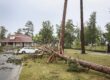
- Wind damage west of Long Prairie, with trees and power lines down, plus extensive grain bin damage northeast of Atwater
Where St. Cloud Hail Damage Was Reported
The heaviest hail core tracked directly over the St. Cloud metro. Spotters measured half-dollar stones inside the city, and a second report came in from Benton County just northeast of town. Meanwhile, Waite Park, Sartell and Sauk Rapids sit inside the same corridor. Because hail cores are narrow, your neighbor two blocks away may have escaped completely while your roof took a direct hit. That is why St. Cloud hail damage is so often missed. It is rarely uniform across a neighborhood.
Why Half-Dollar Hail Is Still a Roofing Problem
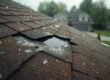
Homeowners often assume that only baseball-size hail matters. However, that is not how shingles fail. At 1.50 inches, a hailstone hits with enough force to knock the protective granules off an asphalt shingle and bruise the mat underneath. The shingle may look intact from the ground. Underneath, though, the asphalt layer is now exposed to ultraviolet light and freeze-thaw cycles.
That damage does not leak today. Instead, it leaks in eighteen months, long after the claim window has closed and long after the storm is forgotten. Older roofs are especially vulnerable, since aged shingles are already brittle. In short, half-dollar hail shortens a roof life without announcing itself.
The Funnel Clouds Near Buffalo and Clear Lake
Four separate funnel clouds were reported on July 4. Two formed near Buffalo, one near Maple Lake, and another between Becker and Clear Lake. Fortunately, none touched down. Cloud bases sat too high and wind shear stayed too weak for a true tornado. Still, rotating storms produce erratic wind bursts underneath them. Consequently, homes in Wright and Sherburne counties should be checked for lifted shingles and loose ridge caps even without a confirmed tornado.
More Than Three Inches of Rain Made It Worse
The 3.26 inches that fell on St. Cloud did real damage on its own. Rain at that rate overwhelms gutters, backs up behind ice dam membranes, and finds every gap in flashing. If your gutters overflowed on July 4, that is a warning sign. Similarly, water stains that appeared in a ceiling or along an attic rafter in early July almost certainly trace back to this storm.
How to Check for St. Cloud Hail Damage Yourself
Before you call anyone, walk your property and look for these signs. Each one takes a minute:
- Check your gutters and downspout outlets for dark granules that look like coarse sand
- Look at your air conditioner fins, window screens and garage door for round dents, because soft metal dents at the same threshold that bruises shingles
- Scan the ridge line with binoculars for missing cap shingles or displaced sections
- Inspect metal vents, valleys and chimney flashing for dimpling
- Go into the attic during daylight and look for pinholes of light or fresh water staining
If you find two or more of those signs, you likely have real St. Cloud hail damage rather than normal wear.
What to Do If You Find St. Cloud Hail Damage
First, photograph everything and note the date as July 4, 2026. Second, call for a professional inspection before you call your insurer, so that you know what you are reporting. Third, keep your documentation together. Minnesota policies generally allow twelve to twenty-four months to file, but earlier claims are cleaner and easier to tie to a specific storm. Our Minnesota hail claim guide walks through the process step by step.
Why Metal Roofing Answers a Summer Like This One
Central Minnesota has now taken hail in April, June, July and August of 2026. That pattern is not going away. Class 4 impact-rated standing seam metal roofing is tested against two-inch steel balls dropped at 90 mph, which is far beyond what fell on July 4. In addition, many Minnesota carriers discount premiums by 20 to 30 percent for Class 4 roofs. Paired with a 40 to 70 year service life, metal often costs less over time than replacing asphalt every decade.
Free Inspections Across Central Minnesota
Northern Lights Metal Roofing is scheduling free roof inspections throughout the July 4 storm corridor. That includes St. Cloud, Waite Park, Sartell, Sauk Rapids, Clear Lake, Becker, Big Lake, Monticello, Buffalo, Maple Lake, Sauk Centre and Long Prairie. We document damage in writing, photograph every affected area, and work directly with your adjuster. If the July 4 storms passed over your home, contact us today and get on the schedule before the fall rush begins.