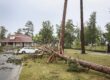



August 7, 2026 brought two separate rounds of hail to Minnesota before lunch. The first hit Hubbard County before sunrise. The second rolled over the St. Cloud metro late that morning. Together they produced the worst central Minnesota hail damage of the month, with stones measured up to 2.75 inches near Park Rapids. If you own a home in Park Rapids, Nevis, Lake George, Bemidji, St. Cloud, Waite Park, Sartell or Sauk Rapids, your roof is worth a look.

Two Waves of Central Minnesota Hail Damage in One Morning
Most storms give you one shot at damage. This one gave two, roughly five hours apart and about a hundred miles apart. The National Weather Service logged dozens of separate reports across both corridors. You can browse the full NWS Twin Cities storm archive if you want the raw record.
Park Rapids Took the Largest Stones
The first round arrived between roughly 5:15 and 6:30 in the morning. Because it came so early, many homeowners slept through it entirely. Spotters did not:
- 2.75 inches northwest of Park Rapids, ruler measured, the largest stone reported in Minnesota that day
- 2.50 inches at two locations north and north-northwest of Park Rapids
- 2.00 inches in Park Rapids itself, described as golf ball and lime size, plus reports east of town and south of Nevis
- 1.75 inches in Nevis and along Highway 34 east of Park Rapids
- 1.50 inches at Lake George, Hubbard, and several points around Park Rapids
- 1.25 inches at Alida, Zerkel and Big Sand Lake, with quarter-size hail at Bemidji, Osage and Nimrod
The St. Cloud Metro Got Hit a Second Time
The second round moved through between 10:42 and 11:16 that morning. St. Cloud recorded a photo-documented 1.50-inch stone. Quarter-size hail fell across the city and in every direction around it, including east and west of St. Cloud, northwest of the city, and east of Waite Park. Benton County reported quarter hail northeast and east of St. Cloud as well. Further south, a 58 mph gust was measured west of Plato.
That matters because the same area already took half-dollar hail on July 4. Our July 4 storm recap covers that event. Two hail events in five weeks is cumulative. Shingles do not heal between storms.
What 2.75-Inch Hail Does to a Roof
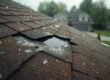
At 2.75 inches, a hailstone stops bruising and starts breaking. It fractures the asphalt layer, splits the fiberglass mat underneath, and opens a direct path for water. Metal vents dent visibly. Skylights crack. Gutters take dimples you can feel with a hand. In other words, this is replacement territory rather than repair territory for most asphalt roofs that took a direct hit.
Even the quarter-size hail around St. Cloud does real work. It strips granules, which exposes asphalt to ultraviolet light. The roof then ages several years in one season.
Hail Kept Falling Later in August
August 7 was the biggest day, but not the only one. On August 17, quarter-size hail piled up near Bertha and Clarissa in Todd County, with piles still sitting in yards half an hour later. Then on August 20, an evening round dropped 2.50-inch hail near Vesta and 1.75-inch hail near Paynesville and Hanley Falls, where vehicles and siding were damaged. That same evening, Brainerd lost mature oaks and a brick chimney to wind, with 2.00-inch hail measured near Cuyuna.
How to Spot Central Minnesota Hail Damage From the Ground
Run through this before you call anyone. It takes about ten minutes:
- Check gutters and downspout outlets for dark granule buildup that looks like coarse sand
- Look at your air conditioner fins, mailbox, grill lid and window screens for round dents
- Examine metal roof vents, valleys and chimney flashing for dimpling, since bare metal shows impacts first
- Scan the ridge with binoculars for cracked or displaced cap shingles
- Check the attic on a bright day for daylight, damp sheathing or fresh staining
- Note the date on any photos you take, because adjusters ask
Do Not Assume Your Roof Was Skipped
Hail cores are narrow. One street gets 2 inches while the next street gets rain. As a result, plenty of homeowners with real central Minnesota hail damage never file, simply because the house looked fine from the curb. Minnesota policies generally allow twelve to twenty-four months to report. Still, earlier documentation ties damage to a specific date far more cleanly.
Free Inspections for Central Minnesota Hail Damage
Northern Lights Metal Roofing is scheduling free inspections across both August 7 corridors. That includes Park Rapids, Nevis, Lake George, Bemidji, Osage, St. Cloud, Waite Park, Sartell, Sauk Rapids, Clearwater, Becker, Big Lake, Monticello and Paynesville. We document everything in writing, photograph each affected area, and work directly with your adjuster. Contact us to get on the schedule before the fall backlog builds.